Orthodontics
Lake Forest, IL – Dr. Michael Stosich is trained in treating some of the most complex cases in the cleft lip and palate field. He uses Nasoalveolar Molding as one of the tools to help prepare babies born with cleft lip and palate for surgery. Dr. Stosich is currently the only doctor in Illinois offering this treatment option.
But what is NAM and who is it for? Dr. Stosich explains how it works and its benefits.
“Nasoalveolar molding is a non-surgical therapy to prepare infants born with cleft lip and palate for surgery,” says Dr. Stosich. “It essentially works to reshape the gums, lips, and nose in the first few months of a baby’s life in order to facilitate better surgical outcomes.”
What is NAM?
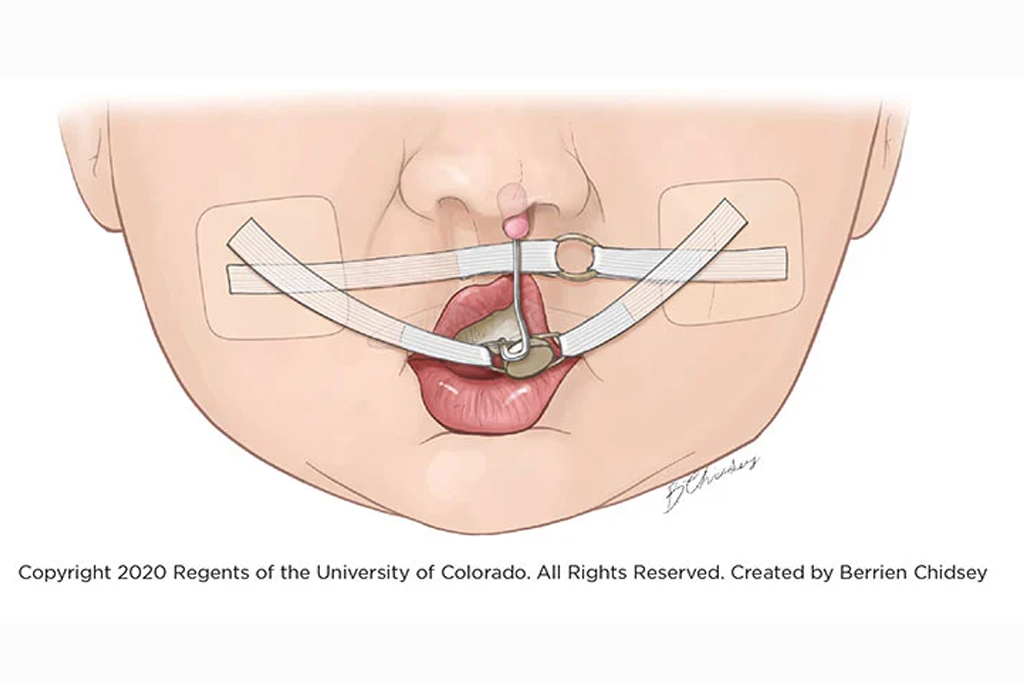
The purpose of Nasoalveolar molding is to reduce the cleft width and reshape the nose cartilage, which thereby improves surgical results and reduces the need for more complex revisions in the future. It reduces the cleft inside the lip, reduces the gap in the upper lip, and lifts and narrows the nose.
NAM is mainly used for children with large or wide clefts. It improves surgical results by reducing the size of the cleft. This means there is less tension when the surgeon closes the cleft, which reduces the risk of scarring.
How does NAM work?
NAM gently directs the growth of your baby’s gums and shape of their nose in the first few months of life, when the tissues are easily moldable.
An acrylic mouthplate will be fitted to cover the roof of your baby’s mouth, similar to a retainer. The mouthplate protects the delicate nasal tissues from the surface of the tongue by restoring a boundary between the mouth a nose cavities.
The plate is held in place with rubber bands that are taped to the cheeks. It is worn 24 hours a day, 7 days a week, even when they are feeding. Every week or two, Dr. Stosich will make small changes to the shape of the mouthplate to better guide the gums as they grow. Once the gap in the gums has reached a small enough point, a nasal stent will be added to the plate. The stent is made of soft dental material and orthodontic wire, and it will be used to lift and shape the nose. Over time, we will gradually adjust this extension to restore the shape of the nose.
NAM does not push or stretch the tissues, it simply guides their growth which we refer to as passive molding.
What is a cleft palate?
Cleft palate is one of the most common birth defects worldwide. It is caused by a combination of genetic and environmental factors, and occurs when the tissues of the lip and mouth do not fuse together properly in the first trimester of pregnancy. Cleft palates can be the result of environmental factors introduced during pregnancy or the result of a gene passed down from either parent. It can even be the result of a genetic mutation. In many cases, there is no family history of cleft.
Can cleft palate be prevented?
The palate forms between the 6th and 12th weeks of pregnancy, and many women often do not even know they are pregnant yet at this point. So the best prevention is ensuring early prenatal care and to lead a healthy lifestyle prior to pregnancy. Environmental factors that may contribute to an increased chance of cleft palate include mothers who smoke, have diabetes, or who take anti-seizure medications early in pregnancy.
Do cleft palates have to be fixed?
Yes, cleft palate repair is essential for ideal health. Without correction, children can face:
- Chronic ear infections and potential hearing loss
- Severe malnutrition do to feeding difficulties
- Significant speech impediments
- Dental and orthodontic complications
Do cleft palates affect speech?
Yes, cleft palates can negatively affect your child’s speech development. Air escapes through the nose, which can make it very difficult to make certain sounds. The “pressure” consonants – P, B, T, D, K, G, S, and SH can be difficult for a child with a cleft palate to make.
While cleft palates cannot typically be prevented, they can be treated. NAM allows Dr. Stosich and his team to reshape the gums, lip, and nostrils prior to surgery, leading to much better outcomes and fewer procedures needed later in life.
Dr. Stosich also offers another pre-surgical treatment for cleft palate, called the PLANA system. This system utilizes an innovative approach to traditional NAM treatment. A prefabricated medical-grade silicone device supports and shapes the nasal cartilage and the tissue between the nostrils, while a medical adhesive works in conjunction with it to bring the separated lip and gum segments closer together.
AS the Director of Orthodontics at the University of Chicago, Dr. Stosich works with the cleft palate team to treat some of the most complex cases in the field. He has dedicated his career to ensuring his patients have access to the most comprehensive treatment available.
If you are interested in learning more about how NAM can help your baby, contact Dr. Stosich today at 847-579-4979.